6 Unique Shakespeare Narration Ideas for Every Grade
Narrating Shakespeare can feel a little daunting or tedious sometimes, so here are 5 ways you can switch it up!
Compose a letter from the perspective of one of the characters
This style of narrating is one of my preferred ones! I remember I narrated most of our book we read about Benjamin Franklin in this manner. You could do it as a letter from one character to the play to another, to a made-up character, or even as a diary entry! I A helpful tip: When composing the letter, try to think about how that character speaks and incorporate their personality into it!
Act it Out
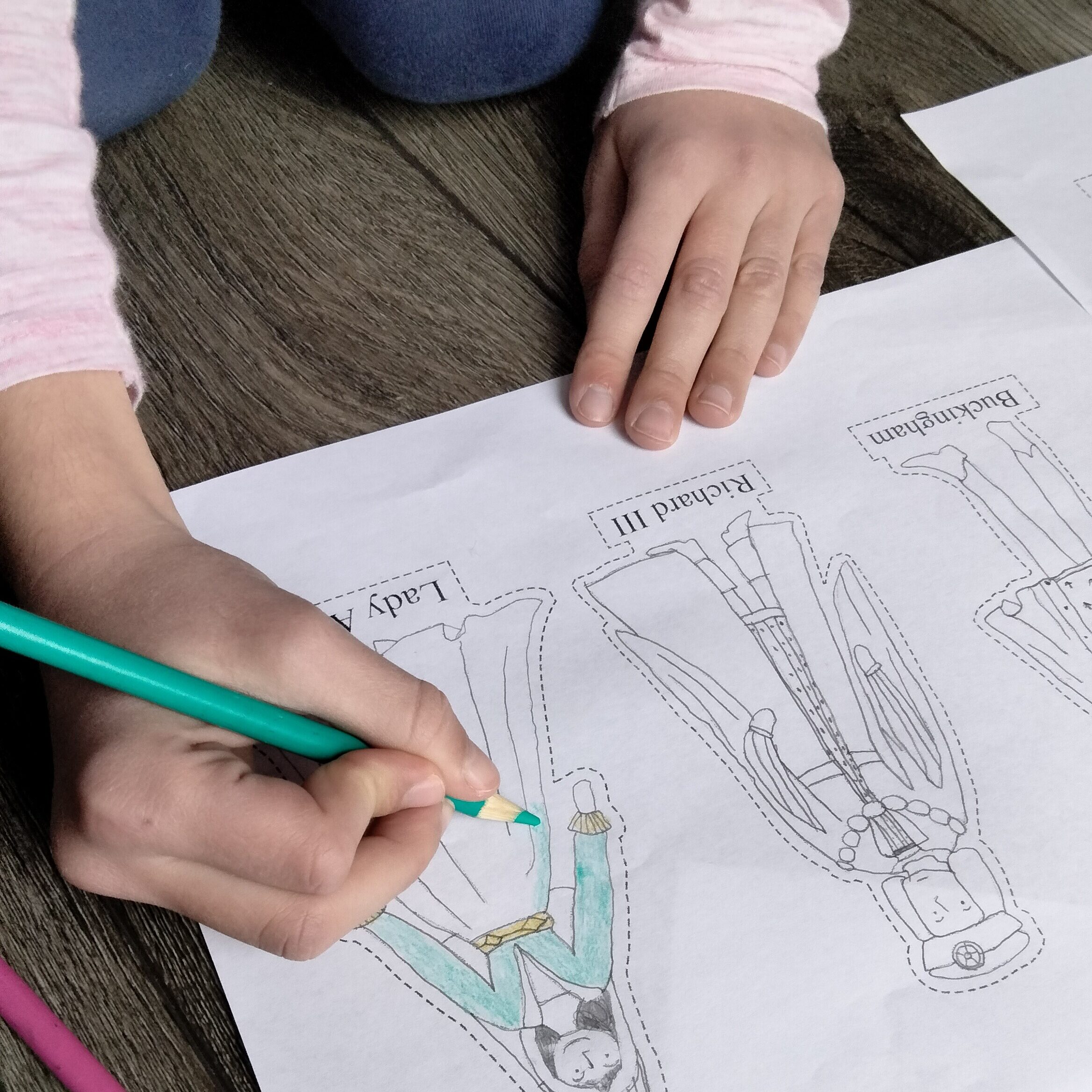
If you are doing Shakespeare with a large group, or even just with several siblings, turn it into a performance and have them act out their narration of the day’s lesson. You can use Shakespeare puppets to do this, or find props and put on a ‘live-action’ performance. Students can write out their lines beforehand, or just improvise the dialogue. This latter method often leads to some hilarious moments!
Write a poem about the scene
When inspiration strikes, poetry can be an entertaining form of narrations. The poem could focus on just a short scene, summarize the play’s plot, or tell the perspective of a certain character. I actually submitted one of the poem narrations I did for Julius Caesar to a writing magazine and it was published!
Illustrate it
For younger students, drawing or painting a scene from the play can be a good way to put their narration down on paper without the pressure of writing. You could do it as a comic-strip style drawing, as a quick pen-and-ink sketch, or even design a set for that scene in the play! These are fun to display at the end of the term. I remember I once did a whole series of illustrations for The Hobbit which we pinned up over the fireplace for our end of term showcase!
Write it into Modern English
Although I am not a fan of reading the modern English versions of the play instead of the original language, writing your own version of the play in modern English is actually a great way for older students to narrate. Instead of ‘outsourcing’ the brain work of understanding the old English and missing out on the beautiful rhythm of the words, students can hear the original language and then use their understanding to put their own spin on the play. This method is very similar to paraphrasing a poem, and writing a script of the play in modern English can help students see if they understood the main points Shakespeare was trying to get across, and the nuances of the original words.